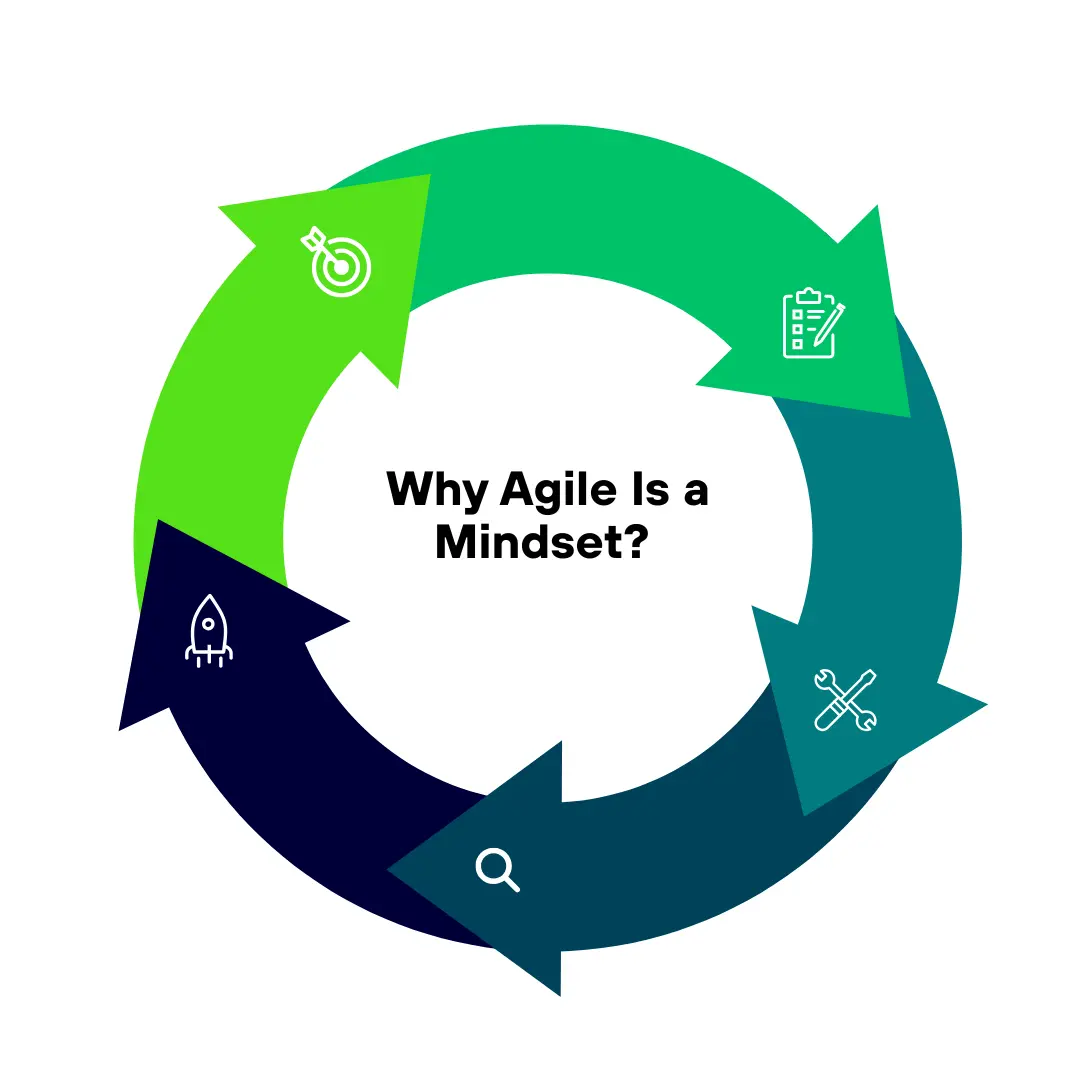
Agile is often treated as a framework to be implemented Scrum boards are set up, sprints are scheduled, and stand-ups become routine. Yet many organizations that “do Agile” still struggle with missed deadlines, frustrated teams, and products that fail to deliver real value.
The reason is simple: Agile is not a checklist or a process.
It is a mindset.
Without the right mindset, Agile practices become rituals. With it, they become powerful tools for learning, collaboration, and impact.
The Common Misunderstanding of Agile
Many organizations adopt Agile by:
- Following Scrum or SAFe ceremonies
- Using Agile tools and dashboards
- Renaming project managers as product owners
But they keep the same behaviors:
- Fixed scope with no room for learning
- Top-down decision-making
- Fear of change or failure
In this context, Agile becomes traditional project management with new terminology and the benefits never materialize.
What Agile Was Always Meant to Be
At its core, Agile is built on a set of values:
- Individuals and interactions over processes and tools
- Working solutions over exhaustive documentation
- Customer collaboration over rigid contracts
- Responding to change over following a fixed plan
These principles emphasize adaptability, trust, and continuous improvement not strict adherence to a framework.
Agile as a Mindset: What It Really Means
1. Embracing Uncertainty
Agile teams accept that not everything can be known upfront.
They:
- Learn through experimentation
- Adjust direction based on feedback
- Make decisions with incomplete information
This mindset replaces false certainty with informed progress.
2. Focusing on Value, Not Output
Agile teams measure success by impact, not activity.
Instead of asking:
- “Did we deliver all planned features?”
They ask:
- “Did this solve a real user problem?”
- “Did it move the business forward?”
Value drives priorities, not task completion.
3. Collaboration Over Control
Agile thrives in environments where:
- Teams are empowered to make decisions
- Stakeholders are engaged continuously
- Feedback flows in all directions
Control is replaced by trust, and alignment replaces micromanagement.
4. Continuous Improvement as a Habit
Agile teams don’t wait for projects to end to improve.
They:
- Reflect regularly on what’s working
- Address issues early
- Improve processes incrementally
Learning is built into the rhythm of work.
Why Agile Frameworks Alone Fall Short
Frameworks like Scrum or Kanban are useful but only when supported by the right mindset.
Without it:
- Sprints become deadlines
- Stand-ups become status meetings
- Retrospectives become empty rituals
With it:
- Frameworks provide structure without rigidity
- Teams adapt practices to their context
- Agile becomes sustainable and scalable
Leadership’s Role in Agile Success
Agile transformation starts at the top.
Leaders must:
- Accept transparency and experimentation
- Support teams during uncertainty
- Shift from command and control to enablement
Without leadership buy-in, Agile remains superficial.
Agile in Practice: What Successful Teams Do Differently
Successful Agile teams:
- Prioritize learning over predictability
- Invite feedback early and often
- Treat failure as a source of insight
- Adapt processes instead of enforcing them
They don’t “implement Agile”—they live it.
Final Thought
Agile cannot be installed like software.
It must be adopted as a way of thinking.
When Agile is treated as a mindset, frameworks become flexible tools, teams become resilient, and products evolve based on real needs not assumptions.
That is when Agile delivers on its promise.
Comments are closed